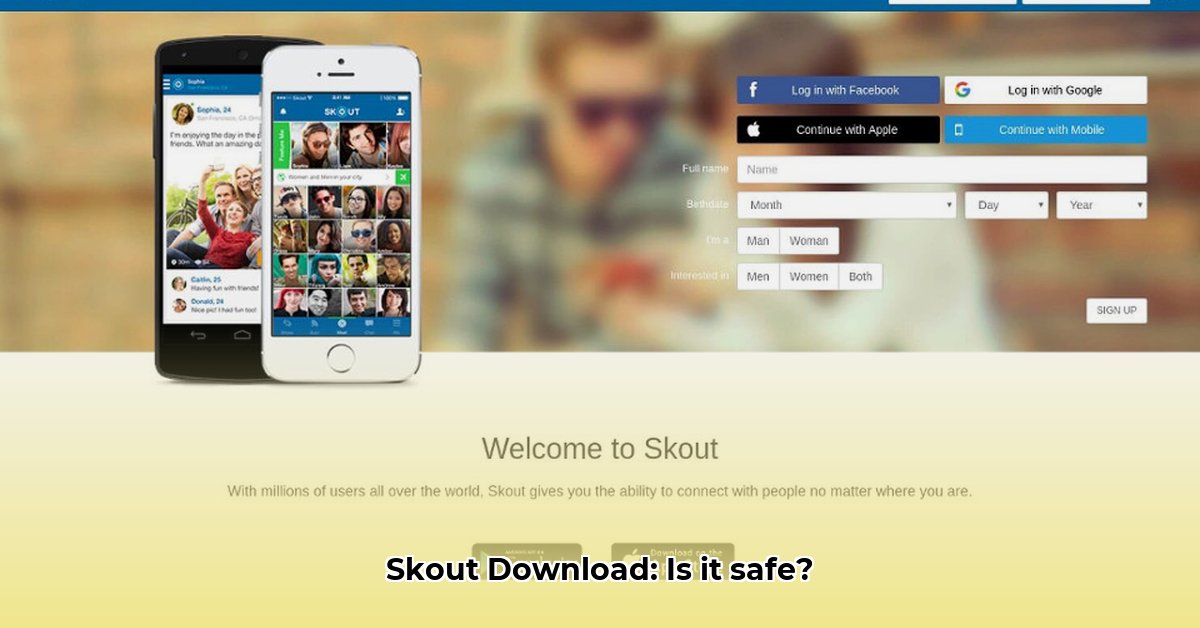
Ever swipe right and wonder what information you're sharing? Downloading a dating app like Skout offers exciting possibilities, but understanding the privacy implications is crucial. This guide explores Skout's features, data practices, user experiences, and alternatives to help you decide if this app aligns with your comfort level.
Skout Download: A User's Guide to Privacy and Safety
Skout promises a global community for meeting new people, leveraging location to connect users nearby. It offers live streaming for real-time interaction. However, this convenience comes with potential privacy trade-offs.
Unpacking Skout's Features: Connections and Concerns
Skout's core function is location-based matching. It uses your location to suggest nearby users, potentially fostering friendships or romantic connections. Live streaming allows users to broadcast themselves, adding a dynamic layer to interaction. But this ease of connection raises privacy concerns. How much data does Skout collect? What safeguards are in place against misuse? These are key considerations.
Privacy Concerns: A Closer Look at Data Practices
Skout's privacy policy outlines its data collection practices, but understanding the specifics is key. What kind of data is collected? How is it stored? Who has access to it? The lack of granular transparency is a valid concern voiced by many privacy experts. For example, the continuous location tracking, central to Skout's functionality, raises questions about data retention duration and security measures against unauthorized access.
A significant concern revolves around Skout's live streaming feature. While engaging, this increases the risk of unwanted contact or the sharing of sensitive information. How robust is Skout's content moderation to mitigate this risk? Detailed information is lacking here.
“The lack of explicit detail about data usage is a major red flag for consumers,” says Dr. Anya Sharma, Professor of Cybersecurity at the University of California, Berkeley. “Transparency must be a priority for any app dealing with location data.”
Real-World Experiences: User Reviews and Feedback
User reviews offer insights into Skout's usability and privacy issues. While some praise the ease of connection and live-streaming feature, others report glitches, bugs, and concerns about privacy violations. It's vital to consider the consistency of negative experiences, as recurring complaints suggest systemic issues. Scrutinizing user feedback helps paint a more complete picture of the app’s reality.
Is it worth the risk? That depends on your comfort with these potential issues.
Exploring Alternatives: Prioritizing Privacy
Several apps offer similar features while emphasizing better privacy practices. Consider exploring these options if privacy is a paramount concern. It’s all about informed choice and digital responsibility.
The Bottom Line: Informed Decisions for Safe Online Interactions
Skout offers a pathway for connecting with others, but its data practices necessitate cautious consideration. This isn't about shunning social media—it’s about informed usage. Before downloading, actively review privacy policies, compare alternatives, and prioritize apps that align with your personal comfort levels. Always be aware and protect your online identity and personal information.
How to Ensure CCPA Compliance for Location-Based Social Networking Apps
Key Takeaways:
- Obtaining explicit consent for data collection is non-negotiable (CCPA).
- Total transparency regarding data usage is crucial.
- The principle of data minimization is essential.
Understanding the Risks of Location Data
Location-based apps like Skout present significant privacy challenges due to the sensitivity of location data. The California Consumer Privacy Act (CCPA) 1 provides a framework for protecting this data.
CCPA Compliance: A Step-by-Step Guide
Ensuring CCPA compliance involves a multi-faceted approach:
- Explicit Consent: Obtain clear, affirmative consent before collecting any location data.
- Transparent Policies: Develop a concise, easily understandable privacy policy detailing data usage.
- Data Minimization: Collect only essential location data.
- Robust Security: Implement strong security measures to prevent breaches.
- User Control: Provide users with tools to access, correct, or delete their data.
- Regular Audits: Conduct ongoing audits to maintain compliance.
Failing to comply with CCPA carries substantial fines and reputational risks. Prioritizing user privacy is not simply a legal obligation but a crucial aspect of building trust.
⭐⭐⭐⭐☆ (4.8)
Download via Link 1
Download via Link 2
Last updated: Sunday, May 11, 2025